Upcycling is the process of turning materials from the wastestream into new materials of higher environmental value.
Upcycle Yourself is a similar concept on a human scale, turning from agents of pollution into agents of environmental change.

May 27, 2011

Schtroumpfanto and the talking legumes

Two short films were recently made by Globules Verts, a micro-media production un-company that covers environmental issues on a string-bean budget. I'm super impressed with the stop motion film, The Legumes Speak to Us, showing that eating legumes is much cooler than eating animals any day of the week. It's only a couple of minutes long and definitely worth watching:


And here's the newest film, Schtroumpfanto, made in a 3 day period, now with English subtitles. To explain the etymology of the title, it's a combination of Schtroumpf, the French word for Smurf, and Monsanto, a chemical company that has patented genetically modified food crops and that now controls a sizeable portion of the world seed market (including GMO, conventional and organic seeds). Smurfs and problematic multinationals together in one movie? Indeed:


I actually cycled 203 kilometers in a 36 hour period to go see the debut screening of Schtroumpfanto at the Festival de films de Portneuf sur l'environnement. Foolish perhaps, though I helped plant the living scenery and wanted that big screen effect. And it was sunny out. And windy. And totally over-ambitious for a first ride of the season. But it was certainly liberating to start pedalling my way into the countryside after the great winter melt.


The films were made by Stéphane, the perpetual activist who conveniently lives 10 metres away from me, where he accomplishes marvellous feats like making vegan accordions and vegan poutine. Here is a photo of Stéphane, sporting an edible tie of wheatgrass grown on a reclaimed jute coffee bag. Eco-chic.

m

May 22, 2011

May harvesting and media revamping

Friday morning woke up to the sunrise, and was brought on an expedition by my roommate down to the riverside in search of wild food. It's fiddlehead season in Quebec, the young plants still edible before they unravel into full-fledged ferns. Boil for twenty minutes, throw out the water, and they're good to go.


Inspired by the fiddleheads, I started rummaging through the garden, the cold cellar and the freezers to see what a local meal would be like in Quebec in May, before the gardening season begins. The morning smoothie featured fresh dandylions, ground sorrel, rhubarb and jerusalem artichokes, last year's frozen strawberries, gooseberries and raspberries (all from the garden), as well as apples I picked a couple of years ago in a public park and then dehydrated. For dinner, we had roasted potatoes from last year, and had fresh May harvests of boiled dandylion roots with sautéd greens of fiddleheads, shallots, lovage, dandylion tops, and garlic greens. Mmm. We shared the meal with my family, who are visiting in Quebec this week.


I'm once again feeling lucky to be largely cut off from the mass media. I live in a big city, where most of the "media" I'm exposed to is educational and in-person, the talks and workshops and documentary showings that spread positive messages, incite critical thinking about problems the world is facing, and encourage action toward positive solutions. Occasionally I garden in a small village, where I feel relaxed and at home, where there is very little contact with the larger world. Within an hour of my family arriving at my garden, I learned about horrible things that had happened in the region in the 1990's, and learned details of floods, hurricanes and tornados across North America in the past few weeks. I was blissfully unaware, and I don't think that my new-found awareness serves any benefit for myself or the rest of the world. A couple of times a year I end up in front of a television watching the news (it happens!) I'm always disappointed by the negative energy and fear that the mass media brings into people's lives. Anyway... it certainly reminds me of the importance of surrounding ourselves with meaningful and empowering media, and being active in choosing the sorts of messages that we expose ourselves to on a regular basis... and even moreso, the importance of being the media, and being active collaborators in creating solution-based messages, however small the diffusion. Moving from mass-media to micro-media, from scare-mongering to change-mongering.


Also heard through the mass-media pipeline that the world would perhaps end on Saturday. On Friday afternoon a gigantic black storm cloud came out of nowhere over our garden. My family had given us a gift of a gooseberry plant, and my roommate was racing to plant it before the impending rainstorm. As he jumped on the pitchfork and mulched with hay, I couldn't help think of the Martin Luther quote from the 16th century, "Even if I knew that tomorrow the world would go to pieces, I would still plant my apple tree." The world is still in one piece, with the addition of a perennial plant that will provide fruit for years to come. And in the end it only rained a little, just enough to water the gooseberry bush.

Meghan

May 8, 2011

Scenes of the ground in springtime

Scene 1: Riding my bike past municipal employees who are raking leaves from beneath the trees and loading them into a truck. I wonder where they're taking the leaves. I wonder why they are being paid to remove a natural source of fertility from urban environments. Wonder what the soil organisms are going to eat if we remove the organic matter.

Scene 2: Riding my bike past a farm along the St-Lawrence River. The soil has recently been tilled. I wonder if the farmer knows that the short-term boost from tillage leads to long-term losses in soil fertility. I wonder if the farmer knows that tillage leads to increased erosion and nutrient leakage when the soil is bare. Wonder if the farmer will try to make up the difference with chemicals.

Scene 3: Walking into the backyard in the countryside, sent on a mission by a friend to see What's happening of interest near the compost pile. All I find is wild strawberries. He points out the small tree branches and twigs that are scattered on the ground, having fallen from the tree above. If we leave them over the years to decompose, they create a stable humus, leading to soil aggradation (the opposite of degradation), like the natural fertility cycle in a forest. Most people remove these to mow the lawn.

Scene 4: Walking with my bike past a retirement community near sunset. There are bales of straw. They've been mulching the gardens. Last year's decomposing mulch is still visible, protecting and feeding the soil. Wonder if knowledge of sustainable techniques will continue with the next generation of retirees.

Scene 5: Being told by a friend that he just bought a new lawnmower. I answer, Aw, that totally sucks that social pressures have convinced people to buy machines to cut down plants... and even to grow grass lawns in the first place. He answers, I don't think it's social pressures. I answer, If everyone around you had a garden and a tall meadow with pathways, would it come to mind to buy a machine to cut it all down? Social faux-pas perhaps.

Scene 6: Watching a utopic black-and-white film from France, l'An 1. The citizens replace their sidewalks with gardens. They only use bicycles. They end the notion of property. They visit a museum that showcases useless modern conveniences, including a lawnmower. The daughter asks, What is a lawnmower? and What is grass? Wonder if this society can ever come about.

Scene 7: Seeing dandylions growing on a deforested and eroding hillside. Thanking the dandylions for being hearty enough to establish themselves and slow down the erosion.

Scene 8: Seeing a father and son raking leaves together and putting them into plastic bags. Sunday bonding activity. Wonder if I should say something. Social faux-pas perhaps. Decide to leave them in peace and write about it instead.

May 3, 2011

Growing in the face of adversity

After nearly 9 million Canadians cast their votes for the NDP, the Bloc, the Liberals, the Greens, and various independent parties, the Conservatives won a majority government (more than 50% of the seats) with only 6 million votes. This certainly shows the basic need for a re-haul of the political system towards proportional representation. Basically, the Conservatives now have free reign to do whatever they'd like, with a political agenda that includes increased militarism, the seal massacre, and unapologetic capitalism at the expense of the environment. At least I can take some solace in living in Québec, one of the few provinces that is strongly in favor of an alternate government. Perhaps I'm in good company.

So, when coming to terms with four years of government that runs contrary to my value system, what is to be done? Grow something positive in the face of adversity. Literally.

The elections signs that are lining our streets with the faces of politicians are made from corrugated plastic, an ephemeral political message for the month of April resulting in trash that will still be around long after our lifetimes. When reclaimed, elections signs can become an integral part of self-watering container gardens, which makes gardening simple in urban spaces like rooftops, balconies, concrete surfaces and contaminated lots. So, grab some scissors (or visit your nearest election office and ask for their signs), and you can grow this summer's vegetables straight from the face of your favourite or least-favourite politician (depending on your sense of humour... I'll be growing on all of their faces, as a non-partisan attempt to grow something positive from the totality of our current political situation).


Find a styrofoam cooler to serve as the container. These can be reclaimed pre-wastestream from food markets or hospitals. Then, the election sign can be used to create a frame that will act as a water reservoir, meaning that you only need to water your plants two or three times a week instead of daily. My friend JP developed this technique for revaluing materials after the last elections. You can find full instructions here. Self-watering containers can be used to grow fruits and vegetables, as well as native flowers to help nourish the waning bee populations.

Four years is a long time... enough time for young trees to start bearing fruit... in four years there is an immense amount we can accomplish on a local level by planting gardens, creating community, educating ourselves, offering information to others, and steadily contributing to a much-needed paradigm shift.

It's springtime, there are election signs abound... there is every reason to begin a garden.

Meghan

Jan 25, 2011

November's resolutions: choco out (and vegan in)

In November I decided to give up chocolate for a year. This is one of those challenges that I've considered and avoided for a long time, though the moment seemed right to embrace it.

Why now? Because I've been watching people around me struggle with their own addictions--cigarettes, alcohol, coffee--while I keep stuffing myself with chocolate with the justification that it's fairtrade. And in November I was interviewed by the Institute for Humane Education, and when they asked me to list my "guilty pleasure", the obvious answer was "chocolate". If I have genuine misgivings, why not let go, and then see how I feel?

Why a year? A month would be short enough that I'd be in anticipation of an upcoming chocolate fix at the end of a mini experiment. A year feels like I'm doing it for life. A year needs to be explained to my friends, my family, my wonderful health food store folk... it's an attempt at change.

And why chocolate? This is the question that people are asking me. The shortest answer I can come up with: it seems inherently problematic to be addicted to substances that displace ecosystems, and to substances that are produced outside of our bioregion. As a society, our chocolate and coffee consumption keeps rising. It seems difficult to objectively evaluate my relationship with a substance that affects my brain chemistry, so through letting go, perhaps I'll be in a situation to appropriately assess my future relations with chocolate. And while I've been a supporter of fairtrade chocolate for years, I would often eat non-fairtrade chocolate in social settings, which is made in part by child slaves. Yet another reason to call it quits for now.

Some people promote the health benefits of chocolate for its antioxidant content, as antioxidants help eliminate free radicals, which are involved in degenerative diseases and cancer. While there is truth in this, there is a current cultural trend toward imported high-antioxidant foods, like chocolate, açai berries, and gogi berries, while somewhat ignoring the wealth of antioxidant-rich foods that grow easily in our backyards, like kidney beans, red cabbage, russet potatoes, and the myriad berries that grow in North America.

We've already become culturally dependent on noxious forms of energy (nuclear, foreign oil, tar sands) by overlooking regionally-appropriate solutions that could have been integrated from the beginning (passive solar, insulation, shared resources), which could have dramatically reduced our energy use. Let's not do the same thing with diet and health trends, compelling foreign ecosystems to be replaced by monocultures, for health benefits that we can attain easily at a local level through sustainable means.

I appreciate the reflections of Sandor in the book Wild Fermentation, which have helped shaped the way I feel about chocolate, sugar and coffee: "We the consumers of the affluent West have come to take for granted the constant flow of pleasure-gratifying products from faraway lands, at the great cost of precious resources such as fossil fuels (for shipping), land (which could be used to grow real food to feed people), labor (which would be better directed toward local needs), and global biodiversity. Globalized markets amount to cultural decadence. Decadence (from the word "decay") is unsustainability: behavior likely to contribute to biological or social decline or collapse."

I find there are complicated questions when it comes to our relations with foreign countries and economies, especially when many cultures have already wiped out their sustainable relations with the land and have become locked into financial dependency with rich nations. As an individual from a (financially) wealthy nation, what is the best way that I can engage in solidarity with distant cultures and distant individuals, if I'd ideally like to see a world where communities are sovereign and self-directed? Is it by minimizing my involvement with their economy, so I'm not contributing to the export of their resources to rich nations? Or is it through purchasing fair-trade products, which has some advantages over the free market system though still compels people to labor on our behalf? Or...? Or...? There are likely other approaches that I haven't been presented with or haven't thought of yet. I think these are questions that I can only fully engage in when I'm free from addiction and desire for imported products, rather than when I'm attempting to justify their consumption. Hence, a year without chocolate, giving me time to distance myself and evaluate.

Choco has been out for two months now, and all is going well, other than a dream about eating some (unfortunately dry) chocolate cake. And, as always, one joy out should be heralded with another joy in. I've recently rediscovered the joy of fresh-squeezed carrot juice (are carrots squeezed? whatever). Coming straight from my favorite family farmers, using the uglier carrots that no one is likely to eat straight up, and fresh squeezed (fresh pressed!) at home, this is a delight... especially with a little red cabbage added to up the antioxidant content.


Meghan

Ah, this posting is called "choco out, and vegan in"... Chris, who I was cycling around the world with in my last blog post (well, *he* was cycling around the world... I just tagged along for a few days until we got to Montreal) became vegetarian, and then vegan, after watching the film Earthlings in November. I'm glad to have been part of that path for him, the first person to answer his curious question in October, "What's a vegan?"

Oct 13, 2010

The return of the extreme gardener

I'm sitting in my tent as I write this, pitched by the side of the TransCanada trail, listening to the highway in the distance, pretending it's the sound of the ocean.

After six days of cycling in southern Quebec, I was returning to where I came from, back to the rawfoodist farm in the countryside, a two day ride from home. After seven hours of cycling toward the farm today, on a bridge I crossed paths with another cyclist riding in the opposite direction, doing a world tour, having covered 12,000km in the last five months. He invited me to ride with him. I turned my bike around, and started backtracking along the TransCanada trail. Backtracking happens.

I'll only be backtracking 150km or so... then on to new trails. I have no large ambitions to travel the world by bicycle, though taking advantage of the last few weeks of snow-free weather only seems to make sense in our glorious northern climate. Heading toward Montreal, perhaps Ottawa, as long as I can bear out the cold nights with insufficient gear.

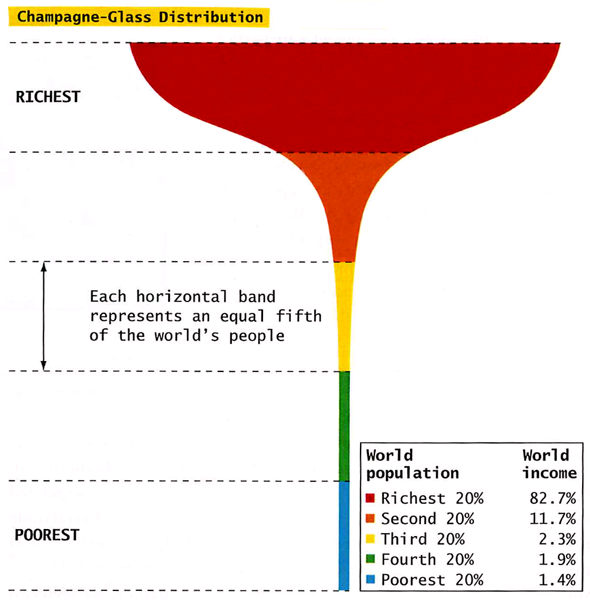
Chris, who I'm riding with, is living on a budget of $40 a week for all expenses. I'm ridiculously impressed, and will surely learn a lot during the ride. $40 a week is quite close to the world median income, and half the world's population live with less than this amount. The world *average* income is much higher, because the numbers are skewed by the large incomes of richer nations, and the average person would have around $8000 per year if the world's wealth were evenly distributed. But, in reality, half of the world's population are living with around $2000 or less per year, including my fellow cyclist. Halfway down the distorted champagne glass of the world's distribution of wealth. Minimalism worth aspiring toward. Chris can be followed at


For the first time this year, I'm riding without a bicycle garden. When starting out, I planted peas in a water bottle. They grew well, though were later feasted upon during the night by rescued bunny rabbits. Glad they served a useful purpose. With the temperature dropping below freezing some nights, it seems that bicycle gardening is no longer a reasonable ambition until next spring. Perhaps I need to plant an evergreen.

However... in more fruitful extreme gardening news, I recently made a set of edible clothing for a local compost festival, growing wheat and rye on sheets of coir. People were eating off of my shirt the evening long! Photos posted below :)

Stay tuned for the return of the extreme gardener,

Meghan


edible clothing collective


farmer revolutionary


100 millimeter diet

Sep 7, 2010

Saving the world, one pickle at a time

For the past year, I've been concocting an unlikely plan to save the world by making pickles. It's a simple plan, it's a plan that could almost work.

Incredibly, while chopping apples with a friend, she told me that she has a plan to save the world with fermentation. “Me too!” I exclaimed. We both looked at each other quizzically, amazed that anyone else could share the same absurd dream.

She shared her plan first. If we ferment huge quantities of food and bury it in jars under the ground, if future humans are ever in great need because their above-ground food resources are scarce, they can dig for fermented food. Not exactly the plan I had in mind, but nevertheless an interesting take on the world-saving capacities of sauerkraut.

My pickle plan goes as follows: we are currently in the process of losing sustainable skills that are essential for the continuance of humanity. While we enforce mandatory education for youngsters to learn about trigonometry and memorize the periodic table, most children and adults are unable to identify wild edibles in their own backyard. The sustainable skills that were developed over centuries and passed down through generations—finding and growing food, making tools from natural materials, building biodegradable shelters, reading the landscape, making canoes and baskets—is simply becoming lost from our cultural collective knowledge. As an eager eco-citizen, I'd like to learn it all, these skills and competencies from a sustainable past and for a sustainable future. Unfortunately, I can't learn it all. Fortunately, collectively we can.

I give to myself, and to anyone else who's up for it, the “sustainable skills challenge,” to learn at least one sustainable skill very well, well enough to teach it to others. Let's retain the sustainable elements of our cultural identity so that we can pass them on to those around us, creating a more ecological present, and pass them down to the next generations, giving them the tools for a healthier future.

Getting back to pickles. My sustainable challenge that I decided to personally undertake is fermentation, learning how to conserve foods with simple techniques so I can eat locally year-round in a northern environment. After one year, I'm considered a local 'fermentation expert' (even if I'm not quite), and I've been able to help many people in my community learn basic fermentation skills. That, in its simplicity, is my elaborate plan to save the world by making pickles.

Cultures from around the world have fermentation traditions, making foods easier to digest, and allowing us to conserve foods for months or years on end. Cucumbers will normally rot within weeks, though when conserved as pickles they can be stored for years. I'm not talking about the uniform and sterile pickles from supermarkets that are covered in distilled vinegar and preservatives. I'm talking about classic, traditional pickles that are made with salt water, genuine living foods. It's amazing—cucumbers in salty water will naturally turn into pickles (scroll down for a recipe). In a salty environment, the bacteria that cause decomposition are unable to thrive, whereas the bacteria lactobacillus are able to live, and they naturally create lactic acid, which conserves the cucumbers and gives a vinegar flavour. Incredible.

Interestingly, fermentation is the only form of food storage that can actually increase the nutritional value. With canning, freezing, and dehydration there are losses of vitamins. With fermentation, while there are surely losses of certain vitamins, other vitamins increase in quantity. For example, in the lactofermentation of vegetables, B vitamins are contributed by the lifecycle of the microorganisms.

I made about 50 litres of pickles this week, with cucumbers and fennel directly from the fields, and water from the well. In a week or two they'll be ready to go into a cold room, where they'll be stored until the snow falls. Perhaps this won't save the world in and of itself. If in doubt, I'll bury the pickles underground for future survivors.

meghan


How to make lactofermented pickles:

There are many techniques for lactofermentation. I'm describing a simple technique that I personally find works well for small batches at home, using readily available materials. Check online for other techniques, especially if you want to make large batches.

Find a clean mason jar, larger is better.

Gently clean some cucumbers in water. Smaller cucumbers tend to make better pickles. The cucumbers should at least be a couple of inches shorter than the mason jar so they fit in easily.

Add cucumbers one by one. Shove in the last couple of cucumbers tightly. Ideally you should be able to turn the jar upside down and shake it without any cucumbers coming out. If the cucumbers are loose, shove some carrots tightly in the gaps. All of the veggies should be at least an inch lower than the top of the mason jar, and tightly wedged.

Add a mix of water and salt, with about 3 tablespoons of salt per litre of water. The salt should ideally be pure, without iodine or anti-caking agents. The water should be unchlorinated (leave tap water on the counter overnight before using it for fermentation, and the chlorine will evaporate). Add this mixture, completely covering the veggies, though leaving a little air at the top of the mason jar. If the veggies are tightly packed, they shouldn't float when the water is added. If they do float, this is problematic, since exposure to air can cause them to rot.

Close the lid of the mason jar gently, as the gases produced by the microorganisms need to escape. The microorganisms will form naturally, as they are all around us, and already on the vegetables.

Water will often overflow from the mason jar during the fermentation process, so it's best to put the mason jar in a bowl or a plastic container. Cover the mason jar with a cloth to avoid contact with sunlight, and leave at room temperature.

Check your pickles every day or two, to make sure none of the veggies are floating above the water. If there is a little white yeast, just scoop it off.

After a week or two, the pickles will probably be ready. Taste them! They should taste like vinegar. When they seem ready, put them in the refrigerator for storage. If it doesn't work the first time, no worries, just keep on experimenting.

Eat them in winter. Share them with friends. Learn a sustainable skill. Save the world, one pickle at a time :)