Upcycling is the process of turning materials from the wastestream into new materials of higher environmental value.
Upcycle Yourself is a similar concept on a human scale, turning from agents of pollution into agents of environmental change.

Showing posts with label Extreme gardening. Show all posts

Jun 21, 2011

Bike gardening = sock gardening


Bicycle gardening has made its official return for 2011, in a totally primped up green vehicle including tufts of wheat on the fender and handlebars, as well as a classic spinning garden in the center of the wheel. After bicycle gardening took first place in the chef category of Earth Day Canada's How did you do that? contest, mobile microgreens were certainly bound for a second run this summer.

Differences from last year's experiments in bicycle gardening? This time, I grew the gardens on my socks. My old socks. Under my bed.

Last year when bicycle gardening was first developed, my bike and I lived alongside each other day and night, so I was able to water 15 times a day and let the garden grow slowly over the course of a 1000km ride. This year, the garden was serving purely as fleeting greenery and snackfood on a two day walk to protest shale gas exploration. Growing the garden on my bike in advance would have been a hassle, as the gardens require *very* frequent watering when left in direct sunlight. And so the "instant bike garden" was born, grown indoors in low-maintenance conditions, and then slipped onto the bike when the time is right.


Enter my socks. My old socks with holes in them. What is to be done with old organic socks that are 90% intact, but 10% not intact in inconvenient places like the heel and toe? Call me a hoarder for keeping broken socks in my closet, though something told me that they would eventually have a curious second life. And indeed, socks proved to be a perfect reclaimed medium for growing extreme gardens. Over a dozen people helped me eat the wheatgrass on the road, and few seemed bothered about its (clean)sock origins. A new era of sock gardening begins... (a recipe to grow your own is included at the end of this post).


The bicycle has also been my main tool of transportation this spring for gardening in the city with our neighborhood urban ecology collective. I've been transporting straw, compost, dirt, sand and edible perennials with this radical set of wheels. My fender sticker that reads "One Less Car" is now becoming outdated. Time to upgrade to "One Less Truck".


The biggest challenge? Wet compost. Like 15 bags of it. What would normally be called "an ever-so-slight incline, almost imperceptible" was now viewed as an "insurmountable hill" that required the aid of random passersby in order to reach the top. The second-biggest challenge? My back wheel starting to detach after surmounting the slight incline. One thing I've learned: stare at your bike and scratch your head, and help will come. Hail the good deeds of friendly strangers in the successful completion of yet another bicycle gardening exploit!

Organically yours,

Meghan


Unintentional colour coordination on a wet compost expedition.
Note the second compost trailer hiding in the background.


Recipe to grow an instant bicycle garden on old socks:

To clarify, when I say *instant*, I really mean six to ten days... the *instant* part is when you transfer it onto the bike.


As an alternative to old socks, try the same technique with reclaimed jute coffee bags, as used here in an instant horn-grass garden.


-Soak wheat kernels for 8 hours. Drain and rinse. Optionally, you can pre-sprout them in a jar for a day as they form their initial roots.
-Take an old sock, wet it, and stick in on a plastic tray or in a reclaimed plastic container.
-Put the wheat kernels on the sock. Spray the wheat kernels with a spray bottle.
-Put it under your bed or in a cupboard, as the darkness will compel the plants to develop their root systems.
-At least twice a day (preferably more), spray a little with a spray bottle. The goal here is making sure the wheat kernels don't dry out, but not sooo wet that mold forms.
-When the wheat forms its root system and has young plant shoots that are an inch or two long, transfer it to the sunlight. Keep spraying regularily with a spray bottle.
-When it's green and bushy, attach it to your bike (or anywhere else) using the metal from twist-ties. The root system of the wheat should have penetrated the fabric enough that the plants will naturally cling to the sock. Water very frequently if you want it to stay green and lively.

Special tips:
(1) Make sure there is enough air flow that mold doesn't develop.
(2) Consider sticking a plastic lid *inside* the sock before adding the wheat kernels, so the roots only go through part of the sock. When the wheat is done growing, remove the plastic lid, and you can slip the sock garden straight onto your mudguards.
(3) If you grow multiple gardens under your bed at the same time, do make sure that you remember to move *all* of them into the sunlight. Trust me, forgotten sock gardens are not the most pleasant surprise. Unless you're into that kind of thing.

May 27, 2011

Schtroumpfanto and the talking legumes

Two short films were recently made by Globules Verts, a micro-media production un-company that covers environmental issues on a string-bean budget. I'm super impressed with the stop motion film, The Legumes Speak to Us, showing that eating legumes is much cooler than eating animals any day of the week. It's only a couple of minutes long and definitely worth watching:


And here's the newest film, Schtroumpfanto, made in a 3 day period, now with English subtitles. To explain the etymology of the title, it's a combination of Schtroumpf, the French word for Smurf, and Monsanto, a chemical company that has patented genetically modified food crops and that now controls a sizeable portion of the world seed market (including GMO, conventional and organic seeds). Smurfs and problematic multinationals together in one movie? Indeed:


I actually cycled 203 kilometers in a 36 hour period to go see the debut screening of Schtroumpfanto at the Festival de films de Portneuf sur l'environnement. Foolish perhaps, though I helped plant the living scenery and wanted that big screen effect. And it was sunny out. And windy. And totally over-ambitious for a first ride of the season. But it was certainly liberating to start pedalling my way into the countryside after the great winter melt.


The films were made by Stéphane, the perpetual activist who conveniently lives 10 metres away from me, where he accomplishes marvellous feats like making vegan accordions and vegan poutine. Here is a photo of Stéphane, sporting an edible tie of wheatgrass grown on a reclaimed jute coffee bag. Eco-chic.

m

Oct 13, 2010

The return of the extreme gardener

I'm sitting in my tent as I write this, pitched by the side of the TransCanada trail, listening to the highway in the distance, pretending it's the sound of the ocean.

After six days of cycling in southern Quebec, I was returning to where I came from, back to the rawfoodist farm in the countryside, a two day ride from home. After seven hours of cycling toward the farm today, on a bridge I crossed paths with another cyclist riding in the opposite direction, doing a world tour, having covered 12,000km in the last five months. He invited me to ride with him. I turned my bike around, and started backtracking along the TransCanada trail. Backtracking happens.

I'll only be backtracking 150km or so... then on to new trails. I have no large ambitions to travel the world by bicycle, though taking advantage of the last few weeks of snow-free weather only seems to make sense in our glorious northern climate. Heading toward Montreal, perhaps Ottawa, as long as I can bear out the cold nights with insufficient gear.

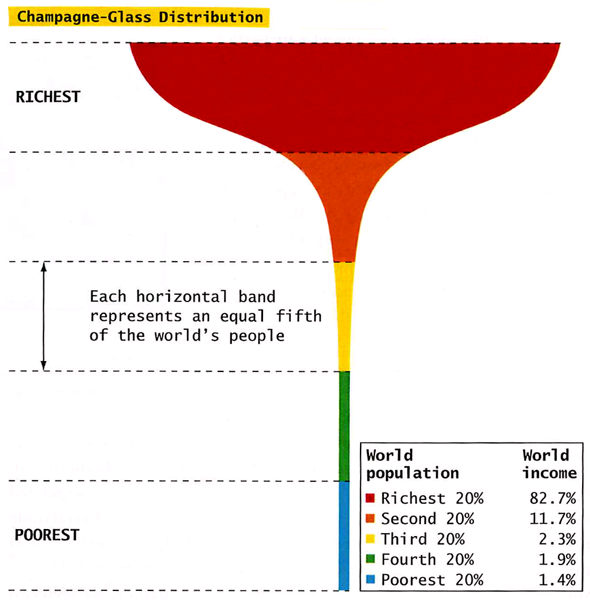
Chris, who I'm riding with, is living on a budget of $40 a week for all expenses. I'm ridiculously impressed, and will surely learn a lot during the ride. $40 a week is quite close to the world median income, and half the world's population live with less than this amount. The world *average* income is much higher, because the numbers are skewed by the large incomes of richer nations, and the average person would have around $8000 per year if the world's wealth were evenly distributed. But, in reality, half of the world's population are living with around $2000 or less per year, including my fellow cyclist. Halfway down the distorted champagne glass of the world's distribution of wealth. Minimalism worth aspiring toward. Chris can be followed at


For the first time this year, I'm riding without a bicycle garden. When starting out, I planted peas in a water bottle. They grew well, though were later feasted upon during the night by rescued bunny rabbits. Glad they served a useful purpose. With the temperature dropping below freezing some nights, it seems that bicycle gardening is no longer a reasonable ambition until next spring. Perhaps I need to plant an evergreen.

However... in more fruitful extreme gardening news, I recently made a set of edible clothing for a local compost festival, growing wheat and rye on sheets of coir. People were eating off of my shirt the evening long! Photos posted below :)

Stay tuned for the return of the extreme gardener,

Meghan


edible clothing collective


farmer revolutionary


100 millimeter diet

Aug 30, 2010

Someone told me recently that he wants in life is to be free, and that he envisions freedom as going to an airport without a ticket, and choosing a place to go. I think this is a vision of freedom that has been sold to us by the oil companies, by the tourist industry, by Freedom 55. Unlimited choice brings us a sense of freedom, though the consequences of those choices are externalized on a global scale, through tar sands, conflicts for resources, and oil spills. One of the most difficult moves for North Americans is giving up their car. Feeling unable to unleash ourselves from unsustainable habits seems more like confinement than freedom.

I did my first solo bike trip in August, a genuine sense of liberation as I rolled alongside the St-Lawrence river at my own rhythm. I feel like a turtle, slowly moving forward without any particular need to hurry, carrying my home as I go. I added a little garden bling to the bicycle, a tuft of wheatgrass sprouting forth from the handlebars. The wild plants in August are abundant: red clover, apples, saskatoon berries, raspberries. I rode 500km round-trip to attend a permaculture course in Temiscouata, a sparsely populated region of forests and maple syrup farms.


handlebar grass

Permaculture is an approach to agriculture that is based on long-term sustainability, earthcare, human care, and the imitation of natural systems. If left on its own, the earth tends toward diversity, the soil is constantly covered by plants, and perennials become established, leading to a complex ecosystem. In most forms of modern agriculture, we do just the opposite: crops are grown in large monocultures or segregated into rows, the soil is frequently bare, and we tend to grow annual plants which demand added fertility. No wonder farming is hard work, when we are always in a struggle, always forcing the earth to be something that it isn't.

In nature, when the ground is disrupted and the soil is exposed, erosion and nutrient-loss are consequences. Hearty pioneer plants naturally establish themselves on the exposed soil, quickly solving the problem by forming a ground cover. In farming, the soil is often purposely exposed and turned with machinery, and young pioneer plants start growing to re-cover the soil. In farming, we call these pioneer plants “weeds”, bringing a negative connotation to these plants that play such a vital role in the health of our planet.

In permaculture, we work with nature rather than against it, imitating natural systems, and establishing gardens that will ideally double as ecosystems. Permaculture is a philosophy, a set of principles and ideas, rather than a specific technique. Though certain techniques, such as forest gardening and self-fertilizing gardens, are associated with permaculture because of their potential to be fully sustainable. My favourite book on permaculture is Permaculture, a Beginner's Guide by Graham Burnett, which covers the fundamental ideas and philosophy in quite a short read, bringing the ideas deeper through illuminating illustrations.


I am now at an organic farm in the Quebecois countryside that is run by vegan rawfoodists. There are vegetables abound. We've been living on “warrior juice”, passing all the vegetables through the juicer that would be less attractive to customers, as well as lactofermenting and dehydrating the less-attractive produce for the winter.


wheatgrass warriors

It's amazing to see the amount of food that could be wasted on a farm, not because the food is bad, but because consumers have been fed such a perfect vision of cosmetic produce by the mega grocery chains, so “second rate” vegetables just tend to rot unpurchased on the shelves. I love ugly tomatoes. A motto to embrace next time I'm in a grocery store :)

There are neighbors here with apple trees and plum trees, with more than they can possibly eat. We've been doing apple-runs, trading for tomatoes and cucumbers. We hooked up a gigantic trailer to my bike, eliminating the need to bring a car. The rawfoodist fellow who runs the farm has a dream of one day making farm machinery that runs on bicycle power. Looking forward to the future...

meghan

Jul 3, 2010

Le Jardin Mobile


Can you spot the bicycle hiding in this picture?


My bicycle garden reached new heights during the second half of our trip, bringing a mixture of pride and embarrassment as we zoomed across south-eastern Ontario. In an effort to bring extreme gardening to more impressive parts of my bicycle, I decided to create an axle garden, on the inner part of the wheel. A resounding “yes” to a crucial question that has been confounding us for centuries: can plants grow and prosper while constantly spinning? Of course they can.


Our bike ride came to an end last week, tipping the odometer at 2,000 kilometers. My experience ended the same way it began: undoing my bike into pieces, packing it up in a box, and giving my financial support to the oil industry by taking a bus. So life goes when we're in a rush, and when we prioritize our desire to travel over earthcare. In the next month, I'll cover more kilometers by bus and carpool than I did in two months by bicycle. Perhaps it's time that I more seriously evaluate my relationship with transport.

At the very least, I've now developed the competence and confidence to cover long distances with the power of my own legs, bringing the potential to more whole-heartedly adopt a sustainable approach to transport. I look forward to traveling to my garden and nearby farms by bicycle now, all within reach at 80km or less.

Another valuable lesson learned from this experience is that my body thrives when living outside. After two months of camping and biking, I was no longer experiencing problems with allergies. Within one night of returning to civilization, I once again developed a state of constantly compromised health. Time to start looking for a second-hand winter tent and embracing the benefits of the outdoors.


After returning home to Quebec, the time seemed right to plant the peas that had been patiently climbing up from my water-bottle holder to my seat post. They are now establishing roots in our hay-fed garden in St-Casimir.

So the journey continues,

Meghan


Recipe for an axle garden: Cycle 1500 kilometres to a seed sanctuary that preserves heirloom varieties. Ask for a cutting of last fall's rye. Thresh by hand. Soak rye in a stainless steel water bottle for 8 hours, then sprout for 24 hours. Sew a “pillow” for the rye using cheesecloth, with 6 layers of cheesecloth under the rye, and 2 layers of cheesecloth over the rye. Ensure in advance that the rye-pillow will fit around the axle. Sprout rye-pillow in a plastic container in panier for 2 days. When young grass begins to peek out from the cheesecloth, attach the rye-pillow to axle using safety pins. Water several times a day, spinning the wheel while watering to ensure good coverage. Enjoy.


Jun 7, 2010

La velorution verte


I'm becoming an extreme gardener. I'm missing out on the planting season at our veganic eco-garden back in Quebec, so I've decided to garden where I am, on a bike. We generally change locations on a daily basis, covering between 30km and 90km. We recently stopped in Beamsville Ontario for two days, and I took full advantage of this temporary stability to add mobile gardens to my ride.

My fender is now growing wheatgrass. Young sprouts of alfalfa and clover are trying to grow from the bikeframe. Pea shoots are poking their heads from a plastic bottle reclaimed from a recycling bin. And in a reused plastic food container grows a polyculture of grass, clover, radish, canola, and beet.

When we visit schools to talk about sustainable living, we spread the idea of being the change that we want to see in the world. I have now seeded the beet I want to change in the world (what do I want to change the beet into? From a seed into beet greens... from beet greens into my cells).

The bike is now receiving much more attention from strangers, along with questions about how to garden and why we're cycling. It may be a feeble attempt at food production and carbon sequestration, though it seems to be a powerful force of smiles and education.

In French, there is a term that I adore, velorution. The French word for bike is velo, so it would simply translate into English as bicycle revolution, though in French it forms a beautiful pun. The velorution is more than a mode of transport, it is a state of being in the world. It's a world where cars are replaced by bicycles as the primary mode of moving ourselves from place to place, where the streets are safe to play in, where oil use and air pollution are replaced by exercise and fresh air, where city planning and zoning ensures close proximity between our homes and our workplaces and services, where individuals can meet and greet each other while riding instead of remaining stagnant extensions of a machine, where the constant drone of motors is replaced by the occasional ding of a bell, where 15km an hour becomes the standard pace of existence. It's part of the great slowdown, to regain our humanity, self-reliance and balance through using our own energies.

Between the 1940's and 1970's, agriculture was reformed during the green revolution. Technology was used to maximize yields, bringing synethetic fertilizers, pesticides, and fossil-fuel powered machinery to the forefront of food production. Yields have increased, though we are borrowing ancient sunlight, attaining larger yields because of cheap oil, leading to an overall loss of calories (and topsoil!) from modern methods of food production.

So, in an effort to flip things around, at least on my own bike, in my own garden, and within my sphere of influence, let me start working toward a velorution verte, my personal green velorution.

Meghan


How to add a bicycle garden:

A passerby in Toronto was impressed with the concept of bicycle gardens, and suggested that I find a way to patent it and sell it. Not a fan of monetizing or patenting life and knowledge, here is all the info, freely shared...

If you'd like to add a pot with soil, simply find a way to attach it to your bike (i.e. a reclaimed plastic water bottle can easily fit in a water bottle holder. Plant densely to avoid soil loss on bumpy roads).

If you'd like to work without soil to add gardens in funky spaces, follow this technique: (1) Begin with love and intention toward the bicycle and the garden, as it requires water and attention several times a day. (2) Wet some cheesecloth. Wrap cheesecloth around the desired part of the bicycle 2 or 3 times (like the fender or the frame), ensuring that you do not inhibit the function of gear and brake cables. (3) Add seeds, preferably pre-sprouted. Grasses, like wheat and barley, are the most effective, since the single blade can easily penetrate the cheesecloth, whereas two-leaf plants tend to be suppressed. Grasses also send out a quicker and heartier root network, and grow to more impressive heights. (4) Wrap the cheesecloth once or twice over the seeds. Close it using safety pins (5) Keep the cleesecloth constantly damp. In sunny weather, this could be 10 times a day. In a cool garage, this might be twice. (6) Ride, harvest, enjoy.