Upcycling is the process of turning materials from the wastestream into new materials of higher environmental value.
Upcycle Yourself is a similar concept on a human scale, turning from agents of pollution into agents of environmental change.

Feb 24, 2012

Winter staycations

This winter I've been developing a joy for vacationing in the sun, basking in the heat, and visiting tourist attractions and beautiful natural sites... all by bicycle, all in sub-zero weather.


The word "staycation" was coined a few years ago to describe vacations where we stay in our home area. While many people do this for economic reasons, I value "staycationing" for its ecological sense. I gave up on airplanes in 2004, but since then have done significant motorized land travel around North America, mostly for the personal enjoyment of seeing beautiful places. In the last two years, I've shifted my vacationing primarily to bike-driven destinations, and have found this type of travel more valuable and rewarding, and the places I visit just as beautiful. This winter, I made my first attempts at sub-zero staycationing in our glorious nordic environment.

Each year we have a multi-day winter bike ride in Québec called Action Citoyenne à Vélo (more info here and here), where a group of riders roam around the landscape regardless of the weather: rain or shine or sleet or snow. In previous years they rode for 3-4 days around the countryside. This year (my first time), we took two days to ride 100km around Québec City, stopping to see the tourist attractions of Old Québec, the waterfall at Kabir Kouba, and the impressive hills north of the city.


Visiting the sights around Québec City


We spent an afternoon climbing through the hills, generating heat through the internal combustion of our bodies, despite it being one of the coldest weekends of the year (varying between -12C and -20C). I frequently had to stop to cool off or remove layers (though cheated a little by using heating pads for my fingers and toes since it was an especially cold weekend). There was a moment of absurdity when we pushed our bikes through half a kilometre of impossibly deep snow... taking this "short cut" seemed like the most adventurous option, so we embarked. Just before emerging from the woods, we were greeted by a snow-dappled lazy river. There is something glorious in hiking along a snowy mountain pass, brought there by the power of our own energies.


Doing a group ride bolstered my confidence and enthusiasm for winter biking. Before I was learning to ride in the winter because it fits with my ecological values. Now I'm enthralled by winter riding because it's freeing, relaxing and a fantastic way to appreciate the outdoors in Canada.

Yesterday I received an invitation to go polar-bear plunging in an icy river with my family farmer, who has been snow-bathing since his childhood. Being a balmy -2C, atypically warm for February, it seemed like the right time to become intiated in the extreme art of winter river plunging. A 30km round-trip bike ride, we hiked down to a gorgeous river bed, and took a 5-second jump into the frigid water as the sun set. Afterward, aside from cold feet, the surrounding air feels warm. There's no need to travel across the world to enjoy a sunset or a beautiful landscape; and no need to travel by motorized vehicles to have thrilling experiences.


Perfect spot for a quick dip


Local sights with my local farmer


When traveling by bike, or on foot, we see more than we would typically see on other types of vacations. When moving at a few kilometres an hour, we can always stop to appreciate the details, rather than driving or flying past them. We discover and value the beauty of our region, and become acutely aware of the landscape and weather conditions that surround us. And best of all, if we like where we visit or make connections with people along the way, it's always accessible and ecological to repeat the experience.

meghan

Jun 21, 2011

Bike gardening = sock gardening


Bicycle gardening has made its official return for 2011, in a totally primped up green vehicle including tufts of wheat on the fender and handlebars, as well as a classic spinning garden in the center of the wheel. After bicycle gardening took first place in the chef category of Earth Day Canada's How did you do that? contest, mobile microgreens were certainly bound for a second run this summer.

Differences from last year's experiments in bicycle gardening? This time, I grew the gardens on my socks. My old socks. Under my bed.

Last year when bicycle gardening was first developed, my bike and I lived alongside each other day and night, so I was able to water 15 times a day and let the garden grow slowly over the course of a 1000km ride. This year, the garden was serving purely as fleeting greenery and snackfood on a two day walk to protest shale gas exploration. Growing the garden on my bike in advance would have been a hassle, as the gardens require *very* frequent watering when left in direct sunlight. And so the "instant bike garden" was born, grown indoors in low-maintenance conditions, and then slipped onto the bike when the time is right.


Enter my socks. My old socks with holes in them. What is to be done with old organic socks that are 90% intact, but 10% not intact in inconvenient places like the heel and toe? Call me a hoarder for keeping broken socks in my closet, though something told me that they would eventually have a curious second life. And indeed, socks proved to be a perfect reclaimed medium for growing extreme gardens. Over a dozen people helped me eat the wheatgrass on the road, and few seemed bothered about its (clean)sock origins. A new era of sock gardening begins... (a recipe to grow your own is included at the end of this post).


The bicycle has also been my main tool of transportation this spring for gardening in the city with our neighborhood urban ecology collective. I've been transporting straw, compost, dirt, sand and edible perennials with this radical set of wheels. My fender sticker that reads "One Less Car" is now becoming outdated. Time to upgrade to "One Less Truck".


The biggest challenge? Wet compost. Like 15 bags of it. What would normally be called "an ever-so-slight incline, almost imperceptible" was now viewed as an "insurmountable hill" that required the aid of random passersby in order to reach the top. The second-biggest challenge? My back wheel starting to detach after surmounting the slight incline. One thing I've learned: stare at your bike and scratch your head, and help will come. Hail the good deeds of friendly strangers in the successful completion of yet another bicycle gardening exploit!

Organically yours,

Meghan


Unintentional colour coordination on a wet compost expedition.
Note the second compost trailer hiding in the background.


Recipe to grow an instant bicycle garden on old socks:

To clarify, when I say *instant*, I really mean six to ten days... the *instant* part is when you transfer it onto the bike.


As an alternative to old socks, try the same technique with reclaimed jute coffee bags, as used here in an instant horn-grass garden.


-Soak wheat kernels for 8 hours. Drain and rinse. Optionally, you can pre-sprout them in a jar for a day as they form their initial roots.
-Take an old sock, wet it, and stick in on a plastic tray or in a reclaimed plastic container.
-Put the wheat kernels on the sock. Spray the wheat kernels with a spray bottle.
-Put it under your bed or in a cupboard, as the darkness will compel the plants to develop their root systems.
-At least twice a day (preferably more), spray a little with a spray bottle. The goal here is making sure the wheat kernels don't dry out, but not sooo wet that mold forms.
-When the wheat forms its root system and has young plant shoots that are an inch or two long, transfer it to the sunlight. Keep spraying regularily with a spray bottle.
-When it's green and bushy, attach it to your bike (or anywhere else) using the metal from twist-ties. The root system of the wheat should have penetrated the fabric enough that the plants will naturally cling to the sock. Water very frequently if you want it to stay green and lively.

Special tips:
(1) Make sure there is enough air flow that mold doesn't develop.
(2) Consider sticking a plastic lid *inside* the sock before adding the wheat kernels, so the roots only go through part of the sock. When the wheat is done growing, remove the plastic lid, and you can slip the sock garden straight onto your mudguards.
(3) If you grow multiple gardens under your bed at the same time, do make sure that you remember to move *all* of them into the sunlight. Trust me, forgotten sock gardens are not the most pleasant surprise. Unless you're into that kind of thing.

Jun 7, 2011

Moratorium for a generation


I took a walk last week with the Moratoire d'une génération. These dedicated folks are walking over 600 kilometers from Rimouski to Montréal to raise public awareness and call for a moratorium for shale gas exploration in the province of Québec.

Shale gas exploration involves hydraulic fracturing, or fracking: drilling a hole in the ground up to 3,000m deep, creating mini-seisms in the rock bed, and pumping down millions of gallons of water that is mixed with several tons of assorted chemicals. The millions of gallons of water are then contaminated by the chemicals, and, if you're unlucky, your drinking water supply may also become contaminated. All to produce natural gas to continue fueling our unsustainable lifestyles. Want to know more? Check out the movie Gasland. Or if you only have two minutes to spare, check out the trailer.

Non means no!

Unfortunately, shale gas exploration may become the next big thing in Quebec. In Canada, you can buy land, but you don't really own the land under your land. Which means that the government can sell off the exploration rights to private companies because of grossly outdated mining laws that favour exploration. Rather than encouraging people to practice healthy land stewardship, we're disempowering people of the simple decision about whether they'd like 596 chemicals pumped under their houses or farms. If the government has no business in our bedrooms, surely they should have no business in our bedrock either, unless it's to stop environmentally-problematic exploration.

And so, a group of committed volunteers are walking from Rimouski to Montreal, an immense area slated for shale gas exploration. They are calling for a moratorium for a generation. The shale gas has been in the ground for about 200 million years, and it's not going anywhere: why not put exploration on hold for 20 years to wait for appropriate scientific reports, health and environmental assessments and public debate? A recent 2011 study from Cornell University shows that shale gas has a worse environmental footprint than coal when viewed over a 20 year period. I can't imagine how we'll feel in 2031 if we're drinking tainted water and realizing that the government's premature and unbacked choices were worse than burning coal. Better to reach 2031 after a 20 year moratorium, and perhaps during those 20 years we can look for more appropriate solutions and embrace much needed energy-use changes by individuals and industries. People say that shale gas will bring jobs and energy, though this ignores the greenhouse gas emissions, contaminated water and potential health implications. Planting massive numbers of edible perennials like fruit trees and blueberry bushes would also bring jobs, along with benefits of long-term food security, sequestering carbon, cleaning the air and water, and providing habitat for wildlife. I know which one I'm voting for.

Luckily the government enacted a temporary moratorium earlier this spring... a good start... let's keep encouraging them to commit to a long-term halt...


Jumping for a moratorium: listen up, government!

I walked with the Moratoire d'une Génération for two days, a wonderful 58 kilometer stroll on the first hot days of the year. I brought along my bicycle, which blister-footed walkers happily accosted during the two days I was with them. And I was able to get back to Québec City using pedal-power on the morning of the third day. The moratoire has now walked past Trois-Rivières, and will be in Montréal on Saturday June 18th to make some noise and raise public awareness. Come and join us if you can make it:


May 27, 2011

Schtroumpfanto and the talking legumes

Two short films were recently made by Globules Verts, a micro-media production un-company that covers environmental issues on a string-bean budget. I'm super impressed with the stop motion film, The Legumes Speak to Us, showing that eating legumes is much cooler than eating animals any day of the week. It's only a couple of minutes long and definitely worth watching:


And here's the newest film, Schtroumpfanto, made in a 3 day period, now with English subtitles. To explain the etymology of the title, it's a combination of Schtroumpf, the French word for Smurf, and Monsanto, a chemical company that has patented genetically modified food crops and that now controls a sizeable portion of the world seed market (including GMO, conventional and organic seeds). Smurfs and problematic multinationals together in one movie? Indeed:


I actually cycled 203 kilometers in a 36 hour period to go see the debut screening of Schtroumpfanto at the Festival de films de Portneuf sur l'environnement. Foolish perhaps, though I helped plant the living scenery and wanted that big screen effect. And it was sunny out. And windy. And totally over-ambitious for a first ride of the season. But it was certainly liberating to start pedalling my way into the countryside after the great winter melt.


The films were made by Stéphane, the perpetual activist who conveniently lives 10 metres away from me, where he accomplishes marvellous feats like making vegan accordions and vegan poutine. Here is a photo of Stéphane, sporting an edible tie of wheatgrass grown on a reclaimed jute coffee bag. Eco-chic.

m

May 22, 2011

May harvesting and media revamping

Friday morning woke up to the sunrise, and was brought on an expedition by my roommate down to the riverside in search of wild food. It's fiddlehead season in Quebec, the young plants still edible before they unravel into full-fledged ferns. Boil for twenty minutes, throw out the water, and they're good to go.


Inspired by the fiddleheads, I started rummaging through the garden, the cold cellar and the freezers to see what a local meal would be like in Quebec in May, before the gardening season begins. The morning smoothie featured fresh dandylions, ground sorrel, rhubarb and jerusalem artichokes, last year's frozen strawberries, gooseberries and raspberries (all from the garden), as well as apples I picked a couple of years ago in a public park and then dehydrated. For dinner, we had roasted potatoes from last year, and had fresh May harvests of boiled dandylion roots with sautéd greens of fiddleheads, shallots, lovage, dandylion tops, and garlic greens. Mmm. We shared the meal with my family, who are visiting in Quebec this week.


I'm once again feeling lucky to be largely cut off from the mass media. I live in a big city, where most of the "media" I'm exposed to is educational and in-person, the talks and workshops and documentary showings that spread positive messages, incite critical thinking about problems the world is facing, and encourage action toward positive solutions. Occasionally I garden in a small village, where I feel relaxed and at home, where there is very little contact with the larger world. Within an hour of my family arriving at my garden, I learned about horrible things that had happened in the region in the 1990's, and learned details of floods, hurricanes and tornados across North America in the past few weeks. I was blissfully unaware, and I don't think that my new-found awareness serves any benefit for myself or the rest of the world. A couple of times a year I end up in front of a television watching the news (it happens!) I'm always disappointed by the negative energy and fear that the mass media brings into people's lives. Anyway... it certainly reminds me of the importance of surrounding ourselves with meaningful and empowering media, and being active in choosing the sorts of messages that we expose ourselves to on a regular basis... and even moreso, the importance of being the media, and being active collaborators in creating solution-based messages, however small the diffusion. Moving from mass-media to micro-media, from scare-mongering to change-mongering.


Also heard through the mass-media pipeline that the world would perhaps end on Saturday. On Friday afternoon a gigantic black storm cloud came out of nowhere over our garden. My family had given us a gift of a gooseberry plant, and my roommate was racing to plant it before the impending rainstorm. As he jumped on the pitchfork and mulched with hay, I couldn't help think of the Martin Luther quote from the 16th century, "Even if I knew that tomorrow the world would go to pieces, I would still plant my apple tree." The world is still in one piece, with the addition of a perennial plant that will provide fruit for years to come. And in the end it only rained a little, just enough to water the gooseberry bush.

Meghan

May 8, 2011

Scenes of the ground in springtime

Scene 1: Riding my bike past municipal employees who are raking leaves from beneath the trees and loading them into a truck. I wonder where they're taking the leaves. I wonder why they are being paid to remove a natural source of fertility from urban environments. Wonder what the soil organisms are going to eat if we remove the organic matter.

Scene 2: Riding my bike past a farm along the St-Lawrence River. The soil has recently been tilled. I wonder if the farmer knows that the short-term boost from tillage leads to long-term losses in soil fertility. I wonder if the farmer knows that tillage leads to increased erosion and nutrient leakage when the soil is bare. Wonder if the farmer will try to make up the difference with chemicals.

Scene 3: Walking into the backyard in the countryside, sent on a mission by a friend to see What's happening of interest near the compost pile. All I find is wild strawberries. He points out the small tree branches and twigs that are scattered on the ground, having fallen from the tree above. If we leave them over the years to decompose, they create a stable humus, leading to soil aggradation (the opposite of degradation), like the natural fertility cycle in a forest. Most people remove these to mow the lawn.

Scene 4: Walking with my bike past a retirement community near sunset. There are bales of straw. They've been mulching the gardens. Last year's decomposing mulch is still visible, protecting and feeding the soil. Wonder if knowledge of sustainable techniques will continue with the next generation of retirees.

Scene 5: Being told by a friend that he just bought a new lawnmower. I answer, Aw, that totally sucks that social pressures have convinced people to buy machines to cut down plants... and even to grow grass lawns in the first place. He answers, I don't think it's social pressures. I answer, If everyone around you had a garden and a tall meadow with pathways, would it come to mind to buy a machine to cut it all down? Social faux-pas perhaps.

Scene 6: Watching a utopic black-and-white film from France, l'An 1. The citizens replace their sidewalks with gardens. They only use bicycles. They end the notion of property. They visit a museum that showcases useless modern conveniences, including a lawnmower. The daughter asks, What is a lawnmower? and What is grass? Wonder if this society can ever come about.

Scene 7: Seeing dandylions growing on a deforested and eroding hillside. Thanking the dandylions for being hearty enough to establish themselves and slow down the erosion.

Scene 8: Seeing a father and son raking leaves together and putting them into plastic bags. Sunday bonding activity. Wonder if I should say something. Social faux-pas perhaps. Decide to leave them in peace and write about it instead.

May 3, 2011

Growing in the face of adversity

After nearly 9 million Canadians cast their votes for the NDP, the Bloc, the Liberals, the Greens, and various independent parties, the Conservatives won a majority government (more than 50% of the seats) with only 6 million votes. This certainly shows the basic need for a re-haul of the political system towards proportional representation. Basically, the Conservatives now have free reign to do whatever they'd like, with a political agenda that includes increased militarism, the seal massacre, and unapologetic capitalism at the expense of the environment. At least I can take some solace in living in Québec, one of the few provinces that is strongly in favor of an alternate government. Perhaps I'm in good company.

So, when coming to terms with four years of government that runs contrary to my value system, what is to be done? Grow something positive in the face of adversity. Literally.

The elections signs that are lining our streets with the faces of politicians are made from corrugated plastic, an ephemeral political message for the month of April resulting in trash that will still be around long after our lifetimes. When reclaimed, elections signs can become an integral part of self-watering container gardens, which makes gardening simple in urban spaces like rooftops, balconies, concrete surfaces and contaminated lots. So, grab some scissors (or visit your nearest election office and ask for their signs), and you can grow this summer's vegetables straight from the face of your favourite or least-favourite politician (depending on your sense of humour... I'll be growing on all of their faces, as a non-partisan attempt to grow something positive from the totality of our current political situation).


Find a styrofoam cooler to serve as the container. These can be reclaimed pre-wastestream from food markets or hospitals. Then, the election sign can be used to create a frame that will act as a water reservoir, meaning that you only need to water your plants two or three times a week instead of daily. My friend JP developed this technique for revaluing materials after the last elections. You can find full instructions here. Self-watering containers can be used to grow fruits and vegetables, as well as native flowers to help nourish the waning bee populations.

Four years is a long time... enough time for young trees to start bearing fruit... in four years there is an immense amount we can accomplish on a local level by planting gardens, creating community, educating ourselves, offering information to others, and steadily contributing to a much-needed paradigm shift.

It's springtime, there are election signs abound... there is every reason to begin a garden.

Meghan

Jan 25, 2011

November's resolutions: choco out (and vegan in)

In November I decided to give up chocolate for a year. This is one of those challenges that I've considered and avoided for a long time, though the moment seemed right to embrace it.

Why now? Because I've been watching people around me struggle with their own addictions--cigarettes, alcohol, coffee--while I keep stuffing myself with chocolate with the justification that it's fairtrade. And in November I was interviewed by the Institute for Humane Education, and when they asked me to list my "guilty pleasure", the obvious answer was "chocolate". If I have genuine misgivings, why not let go, and then see how I feel?

Why a year? A month would be short enough that I'd be in anticipation of an upcoming chocolate fix at the end of a mini experiment. A year feels like I'm doing it for life. A year needs to be explained to my friends, my family, my wonderful health food store folk... it's an attempt at change.

And why chocolate? This is the question that people are asking me. The shortest answer I can come up with: it seems inherently problematic to be addicted to substances that displace ecosystems, and to substances that are produced outside of our bioregion. As a society, our chocolate and coffee consumption keeps rising. It seems difficult to objectively evaluate my relationship with a substance that affects my brain chemistry, so through letting go, perhaps I'll be in a situation to appropriately assess my future relations with chocolate. And while I've been a supporter of fairtrade chocolate for years, I would often eat non-fairtrade chocolate in social settings, which is made in part by child slaves. Yet another reason to call it quits for now.

Some people promote the health benefits of chocolate for its antioxidant content, as antioxidants help eliminate free radicals, which are involved in degenerative diseases and cancer. While there is truth in this, there is a current cultural trend toward imported high-antioxidant foods, like chocolate, açai berries, and gogi berries, while somewhat ignoring the wealth of antioxidant-rich foods that grow easily in our backyards, like kidney beans, red cabbage, russet potatoes, and the myriad berries that grow in North America.

We've already become culturally dependent on noxious forms of energy (nuclear, foreign oil, tar sands) by overlooking regionally-appropriate solutions that could have been integrated from the beginning (passive solar, insulation, shared resources), which could have dramatically reduced our energy use. Let's not do the same thing with diet and health trends, compelling foreign ecosystems to be replaced by monocultures, for health benefits that we can attain easily at a local level through sustainable means.

I appreciate the reflections of Sandor in the book Wild Fermentation, which have helped shaped the way I feel about chocolate, sugar and coffee: "We the consumers of the affluent West have come to take for granted the constant flow of pleasure-gratifying products from faraway lands, at the great cost of precious resources such as fossil fuels (for shipping), land (which could be used to grow real food to feed people), labor (which would be better directed toward local needs), and global biodiversity. Globalized markets amount to cultural decadence. Decadence (from the word "decay") is unsustainability: behavior likely to contribute to biological or social decline or collapse."

I find there are complicated questions when it comes to our relations with foreign countries and economies, especially when many cultures have already wiped out their sustainable relations with the land and have become locked into financial dependency with rich nations. As an individual from a (financially) wealthy nation, what is the best way that I can engage in solidarity with distant cultures and distant individuals, if I'd ideally like to see a world where communities are sovereign and self-directed? Is it by minimizing my involvement with their economy, so I'm not contributing to the export of their resources to rich nations? Or is it through purchasing fair-trade products, which has some advantages over the free market system though still compels people to labor on our behalf? Or...? Or...? There are likely other approaches that I haven't been presented with or haven't thought of yet. I think these are questions that I can only fully engage in when I'm free from addiction and desire for imported products, rather than when I'm attempting to justify their consumption. Hence, a year without chocolate, giving me time to distance myself and evaluate.

Choco has been out for two months now, and all is going well, other than a dream about eating some (unfortunately dry) chocolate cake. And, as always, one joy out should be heralded with another joy in. I've recently rediscovered the joy of fresh-squeezed carrot juice (are carrots squeezed? whatever). Coming straight from my favorite family farmers, using the uglier carrots that no one is likely to eat straight up, and fresh squeezed (fresh pressed!) at home, this is a delight... especially with a little red cabbage added to up the antioxidant content.


Meghan

Ah, this posting is called "choco out, and vegan in"... Chris, who I was cycling around the world with in my last blog post (well, *he* was cycling around the world... I just tagged along for a few days until we got to Montreal) became vegetarian, and then vegan, after watching the film Earthlings in November. I'm glad to have been part of that path for him, the first person to answer his curious question in October, "What's a vegan?"

Oct 13, 2010

The return of the extreme gardener

I'm sitting in my tent as I write this, pitched by the side of the TransCanada trail, listening to the highway in the distance, pretending it's the sound of the ocean.

After six days of cycling in southern Quebec, I was returning to where I came from, back to the rawfoodist farm in the countryside, a two day ride from home. After seven hours of cycling toward the farm today, on a bridge I crossed paths with another cyclist riding in the opposite direction, doing a world tour, having covered 12,000km in the last five months. He invited me to ride with him. I turned my bike around, and started backtracking along the TransCanada trail. Backtracking happens.

I'll only be backtracking 150km or so... then on to new trails. I have no large ambitions to travel the world by bicycle, though taking advantage of the last few weeks of snow-free weather only seems to make sense in our glorious northern climate. Heading toward Montreal, perhaps Ottawa, as long as I can bear out the cold nights with insufficient gear.

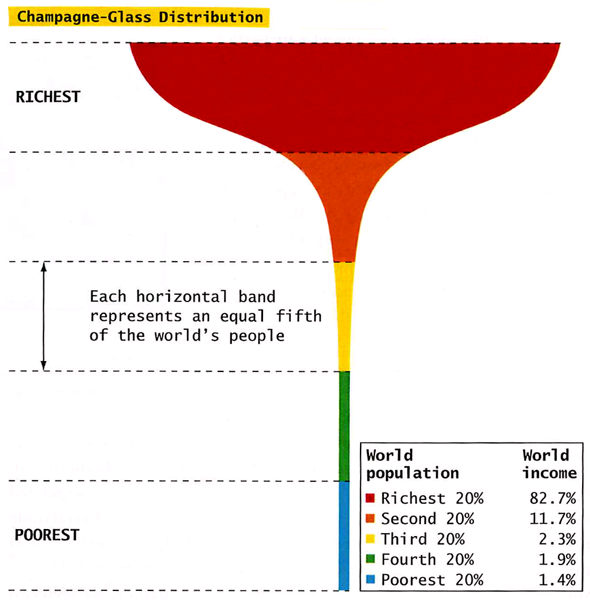
Chris, who I'm riding with, is living on a budget of $40 a week for all expenses. I'm ridiculously impressed, and will surely learn a lot during the ride. $40 a week is quite close to the world median income, and half the world's population live with less than this amount. The world *average* income is much higher, because the numbers are skewed by the large incomes of richer nations, and the average person would have around $8000 per year if the world's wealth were evenly distributed. But, in reality, half of the world's population are living with around $2000 or less per year, including my fellow cyclist. Halfway down the distorted champagne glass of the world's distribution of wealth. Minimalism worth aspiring toward. Chris can be followed at


For the first time this year, I'm riding without a bicycle garden. When starting out, I planted peas in a water bottle. They grew well, though were later feasted upon during the night by rescued bunny rabbits. Glad they served a useful purpose. With the temperature dropping below freezing some nights, it seems that bicycle gardening is no longer a reasonable ambition until next spring. Perhaps I need to plant an evergreen.

However... in more fruitful extreme gardening news, I recently made a set of edible clothing for a local compost festival, growing wheat and rye on sheets of coir. People were eating off of my shirt the evening long! Photos posted below :)

Stay tuned for the return of the extreme gardener,

Meghan


edible clothing collective


farmer revolutionary


100 millimeter diet

Sep 7, 2010

Saving the world, one pickle at a time

For the past year, I've been concocting an unlikely plan to save the world by making pickles. It's a simple plan, it's a plan that could almost work.

Incredibly, while chopping apples with a friend, she told me that she has a plan to save the world with fermentation. “Me too!” I exclaimed. We both looked at each other quizzically, amazed that anyone else could share the same absurd dream.

She shared her plan first. If we ferment huge quantities of food and bury it in jars under the ground, if future humans are ever in great need because their above-ground food resources are scarce, they can dig for fermented food. Not exactly the plan I had in mind, but nevertheless an interesting take on the world-saving capacities of sauerkraut.

My pickle plan goes as follows: we are currently in the process of losing sustainable skills that are essential for the continuance of humanity. While we enforce mandatory education for youngsters to learn about trigonometry and memorize the periodic table, most children and adults are unable to identify wild edibles in their own backyard. The sustainable skills that were developed over centuries and passed down through generations—finding and growing food, making tools from natural materials, building biodegradable shelters, reading the landscape, making canoes and baskets—is simply becoming lost from our cultural collective knowledge. As an eager eco-citizen, I'd like to learn it all, these skills and competencies from a sustainable past and for a sustainable future. Unfortunately, I can't learn it all. Fortunately, collectively we can.

I give to myself, and to anyone else who's up for it, the “sustainable skills challenge,” to learn at least one sustainable skill very well, well enough to teach it to others. Let's retain the sustainable elements of our cultural identity so that we can pass them on to those around us, creating a more ecological present, and pass them down to the next generations, giving them the tools for a healthier future.

Getting back to pickles. My sustainable challenge that I decided to personally undertake is fermentation, learning how to conserve foods with simple techniques so I can eat locally year-round in a northern environment. After one year, I'm considered a local 'fermentation expert' (even if I'm not quite), and I've been able to help many people in my community learn basic fermentation skills. That, in its simplicity, is my elaborate plan to save the world by making pickles.

Cultures from around the world have fermentation traditions, making foods easier to digest, and allowing us to conserve foods for months or years on end. Cucumbers will normally rot within weeks, though when conserved as pickles they can be stored for years. I'm not talking about the uniform and sterile pickles from supermarkets that are covered in distilled vinegar and preservatives. I'm talking about classic, traditional pickles that are made with salt water, genuine living foods. It's amazing—cucumbers in salty water will naturally turn into pickles (scroll down for a recipe). In a salty environment, the bacteria that cause decomposition are unable to thrive, whereas the bacteria lactobacillus are able to live, and they naturally create lactic acid, which conserves the cucumbers and gives a vinegar flavour. Incredible.

Interestingly, fermentation is the only form of food storage that can actually increase the nutritional value. With canning, freezing, and dehydration there are losses of vitamins. With fermentation, while there are surely losses of certain vitamins, other vitamins increase in quantity. For example, in the lactofermentation of vegetables, B vitamins are contributed by the lifecycle of the microorganisms.

I made about 50 litres of pickles this week, with cucumbers and fennel directly from the fields, and water from the well. In a week or two they'll be ready to go into a cold room, where they'll be stored until the snow falls. Perhaps this won't save the world in and of itself. If in doubt, I'll bury the pickles underground for future survivors.

meghan


How to make lactofermented pickles:

There are many techniques for lactofermentation. I'm describing a simple technique that I personally find works well for small batches at home, using readily available materials. Check online for other techniques, especially if you want to make large batches.

Find a clean mason jar, larger is better.

Gently clean some cucumbers in water. Smaller cucumbers tend to make better pickles. The cucumbers should at least be a couple of inches shorter than the mason jar so they fit in easily.

Add cucumbers one by one. Shove in the last couple of cucumbers tightly. Ideally you should be able to turn the jar upside down and shake it without any cucumbers coming out. If the cucumbers are loose, shove some carrots tightly in the gaps. All of the veggies should be at least an inch lower than the top of the mason jar, and tightly wedged.

Add a mix of water and salt, with about 3 tablespoons of salt per litre of water. The salt should ideally be pure, without iodine or anti-caking agents. The water should be unchlorinated (leave tap water on the counter overnight before using it for fermentation, and the chlorine will evaporate). Add this mixture, completely covering the veggies, though leaving a little air at the top of the mason jar. If the veggies are tightly packed, they shouldn't float when the water is added. If they do float, this is problematic, since exposure to air can cause them to rot.

Close the lid of the mason jar gently, as the gases produced by the microorganisms need to escape. The microorganisms will form naturally, as they are all around us, and already on the vegetables.

Water will often overflow from the mason jar during the fermentation process, so it's best to put the mason jar in a bowl or a plastic container. Cover the mason jar with a cloth to avoid contact with sunlight, and leave at room temperature.

Check your pickles every day or two, to make sure none of the veggies are floating above the water. If there is a little white yeast, just scoop it off.

After a week or two, the pickles will probably be ready. Taste them! They should taste like vinegar. When they seem ready, put them in the refrigerator for storage. If it doesn't work the first time, no worries, just keep on experimenting.

Eat them in winter. Share them with friends. Learn a sustainable skill. Save the world, one pickle at a time :)


Aug 30, 2010

Someone told me recently that he wants in life is to be free, and that he envisions freedom as going to an airport without a ticket, and choosing a place to go. I think this is a vision of freedom that has been sold to us by the oil companies, by the tourist industry, by Freedom 55. Unlimited choice brings us a sense of freedom, though the consequences of those choices are externalized on a global scale, through tar sands, conflicts for resources, and oil spills. One of the most difficult moves for North Americans is giving up their car. Feeling unable to unleash ourselves from unsustainable habits seems more like confinement than freedom.

I did my first solo bike trip in August, a genuine sense of liberation as I rolled alongside the St-Lawrence river at my own rhythm. I feel like a turtle, slowly moving forward without any particular need to hurry, carrying my home as I go. I added a little garden bling to the bicycle, a tuft of wheatgrass sprouting forth from the handlebars. The wild plants in August are abundant: red clover, apples, saskatoon berries, raspberries. I rode 500km round-trip to attend a permaculture course in Temiscouata, a sparsely populated region of forests and maple syrup farms.


handlebar grass

Permaculture is an approach to agriculture that is based on long-term sustainability, earthcare, human care, and the imitation of natural systems. If left on its own, the earth tends toward diversity, the soil is constantly covered by plants, and perennials become established, leading to a complex ecosystem. In most forms of modern agriculture, we do just the opposite: crops are grown in large monocultures or segregated into rows, the soil is frequently bare, and we tend to grow annual plants which demand added fertility. No wonder farming is hard work, when we are always in a struggle, always forcing the earth to be something that it isn't.

In nature, when the ground is disrupted and the soil is exposed, erosion and nutrient-loss are consequences. Hearty pioneer plants naturally establish themselves on the exposed soil, quickly solving the problem by forming a ground cover. In farming, the soil is often purposely exposed and turned with machinery, and young pioneer plants start growing to re-cover the soil. In farming, we call these pioneer plants “weeds”, bringing a negative connotation to these plants that play such a vital role in the health of our planet.

In permaculture, we work with nature rather than against it, imitating natural systems, and establishing gardens that will ideally double as ecosystems. Permaculture is a philosophy, a set of principles and ideas, rather than a specific technique. Though certain techniques, such as forest gardening and self-fertilizing gardens, are associated with permaculture because of their potential to be fully sustainable. My favourite book on permaculture is Permaculture, a Beginner's Guide by Graham Burnett, which covers the fundamental ideas and philosophy in quite a short read, bringing the ideas deeper through illuminating illustrations.


I am now at an organic farm in the Quebecois countryside that is run by vegan rawfoodists. There are vegetables abound. We've been living on “warrior juice”, passing all the vegetables through the juicer that would be less attractive to customers, as well as lactofermenting and dehydrating the less-attractive produce for the winter.


wheatgrass warriors

It's amazing to see the amount of food that could be wasted on a farm, not because the food is bad, but because consumers have been fed such a perfect vision of cosmetic produce by the mega grocery chains, so “second rate” vegetables just tend to rot unpurchased on the shelves. I love ugly tomatoes. A motto to embrace next time I'm in a grocery store :)

There are neighbors here with apple trees and plum trees, with more than they can possibly eat. We've been doing apple-runs, trading for tomatoes and cucumbers. We hooked up a gigantic trailer to my bike, eliminating the need to bring a car. The rawfoodist fellow who runs the farm has a dream of one day making farm machinery that runs on bicycle power. Looking forward to the future...

meghan

Jul 3, 2010

Le Jardin Mobile


Can you spot the bicycle hiding in this picture?


My bicycle garden reached new heights during the second half of our trip, bringing a mixture of pride and embarrassment as we zoomed across south-eastern Ontario. In an effort to bring extreme gardening to more impressive parts of my bicycle, I decided to create an axle garden, on the inner part of the wheel. A resounding “yes” to a crucial question that has been confounding us for centuries: can plants grow and prosper while constantly spinning? Of course they can.


Our bike ride came to an end last week, tipping the odometer at 2,000 kilometers. My experience ended the same way it began: undoing my bike into pieces, packing it up in a box, and giving my financial support to the oil industry by taking a bus. So life goes when we're in a rush, and when we prioritize our desire to travel over earthcare. In the next month, I'll cover more kilometers by bus and carpool than I did in two months by bicycle. Perhaps it's time that I more seriously evaluate my relationship with transport.

At the very least, I've now developed the competence and confidence to cover long distances with the power of my own legs, bringing the potential to more whole-heartedly adopt a sustainable approach to transport. I look forward to traveling to my garden and nearby farms by bicycle now, all within reach at 80km or less.

Another valuable lesson learned from this experience is that my body thrives when living outside. After two months of camping and biking, I was no longer experiencing problems with allergies. Within one night of returning to civilization, I once again developed a state of constantly compromised health. Time to start looking for a second-hand winter tent and embracing the benefits of the outdoors.


After returning home to Quebec, the time seemed right to plant the peas that had been patiently climbing up from my water-bottle holder to my seat post. They are now establishing roots in our hay-fed garden in St-Casimir.

So the journey continues,

Meghan


Recipe for an axle garden: Cycle 1500 kilometres to a seed sanctuary that preserves heirloom varieties. Ask for a cutting of last fall's rye. Thresh by hand. Soak rye in a stainless steel water bottle for 8 hours, then sprout for 24 hours. Sew a “pillow” for the rye using cheesecloth, with 6 layers of cheesecloth under the rye, and 2 layers of cheesecloth over the rye. Ensure in advance that the rye-pillow will fit around the axle. Sprout rye-pillow in a plastic container in panier for 2 days. When young grass begins to peek out from the cheesecloth, attach the rye-pillow to axle using safety pins. Water several times a day, spinning the wheel while watering to ensure good coverage. Enjoy.


Jun 7, 2010

La velorution verte


I'm becoming an extreme gardener. I'm missing out on the planting season at our veganic eco-garden back in Quebec, so I've decided to garden where I am, on a bike. We generally change locations on a daily basis, covering between 30km and 90km. We recently stopped in Beamsville Ontario for two days, and I took full advantage of this temporary stability to add mobile gardens to my ride.

My fender is now growing wheatgrass. Young sprouts of alfalfa and clover are trying to grow from the bikeframe. Pea shoots are poking their heads from a plastic bottle reclaimed from a recycling bin. And in a reused plastic food container grows a polyculture of grass, clover, radish, canola, and beet.

When we visit schools to talk about sustainable living, we spread the idea of being the change that we want to see in the world. I have now seeded the beet I want to change in the world (what do I want to change the beet into? From a seed into beet greens... from beet greens into my cells).

The bike is now receiving much more attention from strangers, along with questions about how to garden and why we're cycling. It may be a feeble attempt at food production and carbon sequestration, though it seems to be a powerful force of smiles and education.

In French, there is a term that I adore, velorution. The French word for bike is velo, so it would simply translate into English as bicycle revolution, though in French it forms a beautiful pun. The velorution is more than a mode of transport, it is a state of being in the world. It's a world where cars are replaced by bicycles as the primary mode of moving ourselves from place to place, where the streets are safe to play in, where oil use and air pollution are replaced by exercise and fresh air, where city planning and zoning ensures close proximity between our homes and our workplaces and services, where individuals can meet and greet each other while riding instead of remaining stagnant extensions of a machine, where the constant drone of motors is replaced by the occasional ding of a bell, where 15km an hour becomes the standard pace of existence. It's part of the great slowdown, to regain our humanity, self-reliance and balance through using our own energies.

Between the 1940's and 1970's, agriculture was reformed during the green revolution. Technology was used to maximize yields, bringing synethetic fertilizers, pesticides, and fossil-fuel powered machinery to the forefront of food production. Yields have increased, though we are borrowing ancient sunlight, attaining larger yields because of cheap oil, leading to an overall loss of calories (and topsoil!) from modern methods of food production.

So, in an effort to flip things around, at least on my own bike, in my own garden, and within my sphere of influence, let me start working toward a velorution verte, my personal green velorution.

Meghan


How to add a bicycle garden:

A passerby in Toronto was impressed with the concept of bicycle gardens, and suggested that I find a way to patent it and sell it. Not a fan of monetizing or patenting life and knowledge, here is all the info, freely shared...

If you'd like to add a pot with soil, simply find a way to attach it to your bike (i.e. a reclaimed plastic water bottle can easily fit in a water bottle holder. Plant densely to avoid soil loss on bumpy roads).

If you'd like to work without soil to add gardens in funky spaces, follow this technique: (1) Begin with love and intention toward the bicycle and the garden, as it requires water and attention several times a day. (2) Wet some cheesecloth. Wrap cheesecloth around the desired part of the bicycle 2 or 3 times (like the fender or the frame), ensuring that you do not inhibit the function of gear and brake cables. (3) Add seeds, preferably pre-sprouted. Grasses, like wheat and barley, are the most effective, since the single blade can easily penetrate the cheesecloth, whereas two-leaf plants tend to be suppressed. Grasses also send out a quicker and heartier root network, and grow to more impressive heights. (4) Wrap the cheesecloth once or twice over the seeds. Close it using safety pins (5) Keep the cleesecloth constantly damp. In sunny weather, this could be 10 times a day. In a cool garage, this might be twice. (6) Ride, harvest, enjoy.

May 25, 2010

We reached the outskirts of Toronto yesterday. It's a strange phenomenon when country meets city. Until this point, we had been riding through eastern Ontario, where meadows and forests were contrasted with clearcut farmland. Now that we're approaching more populated areas, clearcut farmland is contrasted against new subdivisions. In one vantage point, there is a farmers' field, a golf course, and a row of cookie-cutter houses. It's the first time since leaving Ottawa that we saw industrial parks followed by rows of commercial franchises: the McDonald's, the car dealerships, the donut shops. I wanted to take pictures of this bastardization of land and culture. But, the photos would simply show what we see every time we're on the outskirts of a large city.

This has reminded me why I don't want to live in southwestern Ontario. Even if we find a small tranquil town, it will likely be overtaken by new land developments within my lifetime. There is nothing glorious in clearcutting habitats. As a culture, we keep increasing our vision of what constitutes an appropriate size of house. We need to downsize. Generations of people before us got by with far less indoor living space. The tiny houses movement, the intentional communities movement, discovering the joys of living with roommates, the acceptance of voluntary simplicity in our own lives... these offer an opportunity to have comfortable living spaces while also putting land aside for natural spaces and habitat renewal. It's all a matter of changing our expectations, of gearing our mindset toward finding fulfillment in an ecological future.

Eastern Ontario has much more to offer in terms of natural beauty. It's true that these areas of glorious lakes and forests have been designated as tourist destinations, though at the very least they retain much of their original ecological structure.

When deciding where to live in life, I will likely find my place by bicycle. Where the cars are infrequent and the drivers are polite, where the trees line the path providing shade and comfort, where you can freely pee at the side of the road, where you can stop at a farmhouse and ask a friendly stranger if you can fill up your water bottle, where someone thought to designate bikepaths so you can ride in a carefree way lost in daydreams... that's where I want to live.

meghan

May 12, 2010

I was dreading today. On our third day of cycling, we were scheduled to do 70km with a fully loaded bike. People told me that it's not as bad as it sounds. They were right. With well-pumped tires and sunny cool weather along quiet country highways, it's a blast. Despite certain body parts being a little sore (like my shoulders), all went very well. Last night I was up until midnight helping (or attempting to help) a fellow teammate fix a bikerack, and I've been promised a shoulder massage in return, so it's shaping up to be quite a good day. Once again, worry proves to be a fairly useless emotion.

18 wheel transport trucks, another common worry on cycling trips, are a somewhat misundertood phenomenon. I will probably feel differently about this if I have any close run-ins with these gargantuan vehicles, but for the moment I've befriended them. Any time I am taking a break by the side of the road and look at the oncoming traffic racing towards me, the transport trucks fill me with fear. When I'm on the road, riding alongside them, it's like a rollercoaster when they pass. There is a whoosh of noise, and they pull you forward in a vortex of wind. There is an exhilirating thankfulness of "Wow, I'm alive!" as they barrel off into the distance.

We've left Manotick and rode into Perth today. The countryside is beautiful compared to the city, though it's still evident that the human race has been dismantling and taming nature even in more "natural" settings. We didn't see any forests. We caught occasional glimpses of wetlands and rivers, and illusions of forests in the distance that proved to be shallow lines of trees. The remaining trees of what once were forests are now simply windbreaks for farmland. I understand the need to feed ourselves, though having a system of food aquisition that is based on clearcutting, tillage, fossil-fuel powered tractors, and long-distance transport is simply destroying the habitats that took millions of years to develop and find equilibrium. No wonder people drive north to build cottages in the forests, yet another industry that is threatening natural environments.

I look forward to planting my own forest garden one day. Forest gardens, otherwise called food forests, is a type of reforestation that is focused on edible perennials. Imagine a canopy of fruit and nut trees, with grape vines climbing, a black current bush, mushrooms on fallen logs, and a groundcover of strawberries and horseradish. This is a way we can reforest, create habitats and food for wildlife, sequester carbon, create enjoyable places to unwind, all the while providing ourselves with food. Planting a forest garden now also provides a positive element to a retirement plan. Rather than investing our money in questionable stocks, we can begin to plant trees that will provide us with a plenty of nourishment in our old age... food security as an ecological pension plan.

I saw an interesting sight while riding. Someone was removing dandylions one by one from a large property. He was almost finished, and there was evidence all over the manicured lawn that he had de-lioned the whole half acre. Presumably he was being paid by the landowner, or perhaps he himself was the landowner and was determined to get every last one. The house next door hadn't mowed their lawn once since spring arrived. It had a beautiful variety of shin-high grasses, and was aglow in yellow flowers. I don't know if I'm misreading the situation, but I'm guessing that the de-lioning landowner was perhaps making a passive-aggressive statement to their neighbours, that not only are dandylions not welcome on his land, but not welcome in their neighborhood in general. I passed dozens of houses in the countryside that had lawns that made a statement of wealth... entire acres of short green grass, mowed by riding lawnmowers that spew greenhouse gases. I wonder how we will change this outdated mentality, and create a new paradigm based on habitat renewal and sustainability. Guess we need to start with the kids. And the teenagers. And the adults. And the politicians. And our neighbours. And ourselves (thanks to Olivier for reminding me to start with myself :)

With the mobile community of cyclists, I've recently started doing theatre in schools about sustainable living. The children have had wonderful suggestions about how to help the environment. I'm pleased to see that even amongst 5 year olds there is an awareness of positive efforts we can take.

Peace,

Meghan

Je m'excuse pour le manque de francais, les francophones! Je trouve plus facilement mes mots dans ma langue maternelle... mais heureusement, nous avons un francophone avec notre groupe, donc au moins je pratique la langue orale! :)

May 9, 2010

J'ai passe la derniere semaine avec un groupe des jeunes canadiens inspirante... les environmentalists avec plein de talent et joie de vivre. Nous sommes un groupe de 19 personnes en totale... on a reste sur un ferme pas loin d'Ottawa pendant un semaine pour notre formation. We've been praticing a play together which we'll be performing for high schools across Ontario, about the way in which individuals can make a difference in the world. Since we'll be traveling by bicycle, we aren't able to bring any props with us, so the theatre piece is done entirely with human props. I've been cast as a lamp, a turbomatic-smoothinator, a bird, and the back half of a car. Yahoo! Our first performance is in Ottawa this afternoon.

Life is going well (perhaps because I haven't had to ride a bike much during the past week). I'm becoming reacquainted with nature, sleeping and waking with the sun. The sheer number of spiders on my tent and in my shoes led me to the conclusion that my tent was on a spider's nest. After moving it to another location and still finding a plethora of jumping spiders each time I reached my tent, I realized that spiders are simply a part of southern Ontario's natural landscape. Guess I never saw it before in the cities.

Highlight of the week: one of the other Otesha members dreamt that I was her permaculture spirit guide. I showed up in her dream, dressed in a tacky ghost costume, and showed her the way toward permaculture. Fantastic.

Second highlight of the week: I've been trying for a few months to translate "decroissance conviviale" into English. Basically, "decroissance" (ungrowth) is a word that represents the alternatives to our society's growth model of progess... "decroissance conviviale" represents a convivial acceptance that society will begin to change in the coming decades, and the embracing of the new lifestyle that will come about in a post-carbon era. It's like voluntary simplicity, though extending it from a personal framework to a larger social framework. I've been struggling with an appropriate term in English, as "convivial ungrowth" just doesn't quite cut it. I had previously come up with "Embrace the great slowdown", which I'm fairly happy with as a translation, though I wondered if I could find a way to shorten it. We had two lovely folk come to talk to us this week about permaculture and humanure. During the presentation, when talking about the transition that our society will face, the woman used the words "compassionate descent". I think this could be a decent translation to get the idea across to the English-speaking world in two words :) I was thrilled to find it. If anyone else has ideas for a translation, let me know :)

I just spent six days outdoors... I don't think I've ever done that in my life. For six days straight, I was either outside, in a tent, in an outhouse, or in an open drafty barn, during rainstorms and coldsnaps, without a warm location for relief. I filled stainless steel waterbottles with hot water and put them under my sweater as a miniature space heater. I had the luxury of spending last night in an apartment. It made me appreciate the comforts that we take for granted... like doors and insulation.

Quote of the week, from another Otesha member: "No complaining when you're saving the world." It's meant as a joke, but it does help keep us centered on the over-arching aims of what we're doing when the hail is falling.

Meghan

May 2, 2010

Life lesson #1: This is useful to know if you're traveling by bus with a bike. With Greyhound, in addition to charging you $30 for transporting your bike, they charge you $10 for a box. Pretty expensive box. If you think you're being clever (like I thought I was) by going to a bike shop and getting a *free* box, you're kidding yourself. Boxes from bike shops are small, and require that you remove your pedals, wheel, handlebars, and fenders. Then, it's too heavy to carry, so it costs $12 to get it to the bus station. And then, when you get to your destination (still thinking that you're clever for getting a free box) when you see someone who spent $10 on an official greyhound box, you realize that the box is twice as big, they only needed to take the front wheel off to fit it in, and, compared to you, they can put their bike back together with half the tools in a quarter of the time. `Nuff said. Buy the greyhound box.

Life lesson #2: Quand tu organises un répas communautaire avec une groupe des gens, n'oublies jamais, jamais à mentionner que tu es végétalienne.

A note with more hindsight: Several weeks later, I renege the sentiments expressed in this post about bicycle boxes (partially, anyway :) Taking my bike into pieces and putting it back together again helped me gain a basic grounding in the way my bike functions... which helped me fix the bike a week later when I dropped it and off-centered the handlebars. Get a small bike box... once at least... as long as you have someone who can help you on both ends and as long as you approach the task with patience.

May 1, 2010

On y va

Je quitte demain matin pour Ottawa, sur un autobus, mon velo dans un boite. Je me retrouve sans dictionnaire et entoure par les claviers anglophones, donc je m'excuse en avance pour tous les erreurs.

I've been preparing for this trip for the last few weeks. The most challenging aspect so far is the amount of consumption... the general aim of the trip is to inform people about a more ecological way of living, though doing this bike trip does involve acquiring a number of items (tent, sleeping bag, bike bell and lights, panniers, etc). J'ai trouve a peu pres un motie usage, mais l'autre motie j'avais besoin a acheter nouveau. So life goes... at least I have a well-equipped alternative to a car now, and should be able to be relatively self-sufficient while being self-propelled.

Voici notre intineraire pour le voyage. Je vais passer quelques jours proche de ma famille et mes amis au debut juin. Yahoo :)

Location Date
Ottawa - Monday May 3 to Monday May 10
Blackburn Hamlet - Tuesday May 11
Manotick - Wednesday May 12
Perth - Thursday May 13 to Friday May 14
Westport - Saturday May 15 to Sunday May 16
Hartington - Monday May 17
Madoc Tuesday May 18
Cambelford Wednesday May 19
Peterborough Thursday May 20 to Friday May 21
Lindsay Saturday May 22
Prince Albert Sunday May 23
Newmarket Monday May 24 to Tuesday May 25
Orangeville Wednesday May 26
Hilsburg Thursday May 27
Guelph Friday May 28 to Saturday May 29
Beamsville Sunday May 30 to Tuesday June 1
Hamilton Wednesday June 2 to Thursday June 3
Oakville Friday June 4
Mississauga Saturday June 5
Toronto Sunday June 6 to Wednesday June 9
Markham Thursday June 10
Oshawa Friday June 11
Coburg Saturday June 12
Trenton Sunday June 13
Kingston Monday June 14 to Tuesday June 15
Howe Island Wednesday June 16 to Thursday June 17
Charleston P Friday June 18
North Augusta Saturday June 19
Russel Sunday June 20
Alfred Monday June 21
Rockland Tuesday June 22,
Ottawa Wednesday June 23 to Friday June 25


Pendant le voyage, je vais avoir l'access a l'internet de temps en temps, mais pas souvent... with our Otesha bike tour, there is also a group blog that you can take a look at to find out more about our progress: http://www.otesha.ca/bike+tours/2010+tours/ferocious+farm/notes+from+the+road.en.html

a+

meghan

Feb 20, 2010

Ferocious Farm Tour, spring 2010


Hé hé :) (english version follows)


Merci de venir me lire! Je suis en train de me préparer pour un voyage de 2 mois avec Otesha (www.otesha.ca), un organisme de charité canadien qui encourage les gens à créer un monde plus écolo. De mai à juin, je vais faire le “Ferocious Farm Tour” (Tour des Fermes Féroces) à vélo avec un éco-communauté mobile, sur un trajet de 1 500 kilomètres. On va passer par les villages agricoles un peu partout dans le sud de l'Ontario, en visitant des fermes bio et des fermes de culture à petite échelle, pour mieux comprendre les enjeux de l'agriculture moderne et les alternatives durables. Pendant le voyage, on va faire du théâtre et des ateliers dans les écoles et les centres communautaires sur les sujets de la consommation responsable, d'un mode de vie écologique et des impacts de nos choix sur la terre. Yahoo!


Je fais une levée de fonds (1$ = conscientisation écolo pour 1 jeune canadien, à peu près). Les dons sont vraiment appréciés, et vous pouvez contribuer jusqu'au début avril à http://www.canadahelps.org/GivingPages/GivingPage.aspx?gpID=6697 Les deux premières étapes sont en anglais, mais après vous pouvez choisir le français.


Pendant ces 2 mois sur la route, je vais être «déconnectée» la plupart du temps, mais j'aimerais rester en contact avec mes amiEs, ma famille, et le monde extérieur :) Je prévois utiliser ce blog pour garder les gens au courant de mes efforts à réduire ma dépendance des combustibles fossiles, et leur partager mon expérience d'un mode de vie simple à échelle humaine.


méghan


Hey hey :)


Thanks for stopping by. Right now I'm gearing up for a 2-month cycling and performance trip with Otesha (www.otesha.ca), a Canadian charity that encourages young people to take an active role in creating a sustainable world. I'll be doing the Ferocious Farm Tour in May and June, traveling across southern Ontario by bicycle in a mobile eco-community. We'll be traveling 1,500 kilometers through agricultural towns, stopping in to see small-scale and organic farms to learn more about sustainable alternatives in the modern foodscape. And throughout the trip we'll be visiting schools and community centres to do theatrical performances and workshops about ecological living, responsible consumerism, and the way in which our choices impact the earth. Yahoo!


I'm in the fundraising stage right now ($1 = humane education for 1 student, or thereabouts). Any donations are much appreciated, and contributions can be made until early April at http://www.canadahelps.org/GivingPages/GivingPage.aspx?gpID=6697


During the two month trip I'll be “offline” for the most part, but would still like to keep in touch with friends, family, and the outside world :) I'm planning to use this blog as a launching point to keep people updated on my attempts to lessen my dependency on fossil fuels and experiment with a human-scale approach to simple living.


meghan